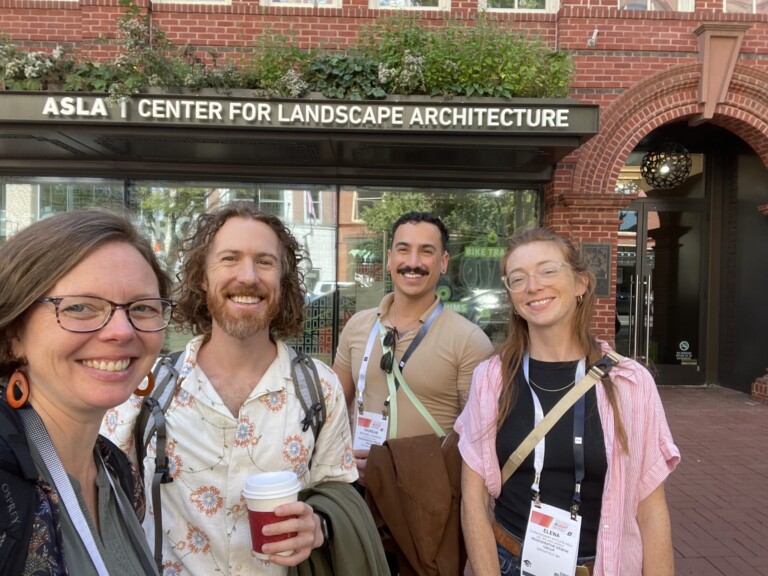

On May 1, team members Bas Gutwein, Rachel Lindsay, and Genevieve Lawlor joined nearly 450 landscape architects and allied design professionals at the David Rubenstein Treehouse at Harvard University for Fieldday 2026, New England’s annual conference on landscape architecture, presented by the ASLA chapters of New England. This year’s theme, “Nor’easter: The Power of Change in New England,” set the stage for a day of sessions on how the profession is responding to and driving change across the region. RDG presented on two topics that reflect different facets of the same values: the ecological and technical work of understanding land, and the organizational work of building a resilient, human-centered practice.
Presenting SOCMA for Climate Action in Massachusetts
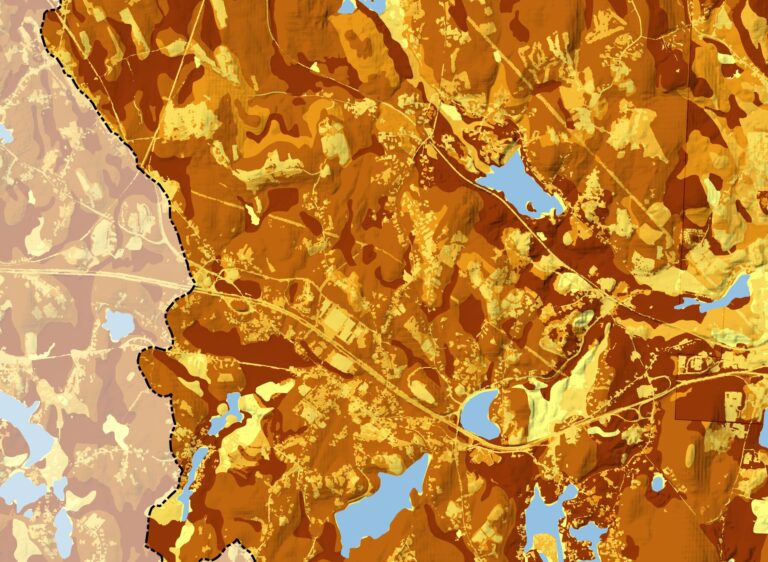
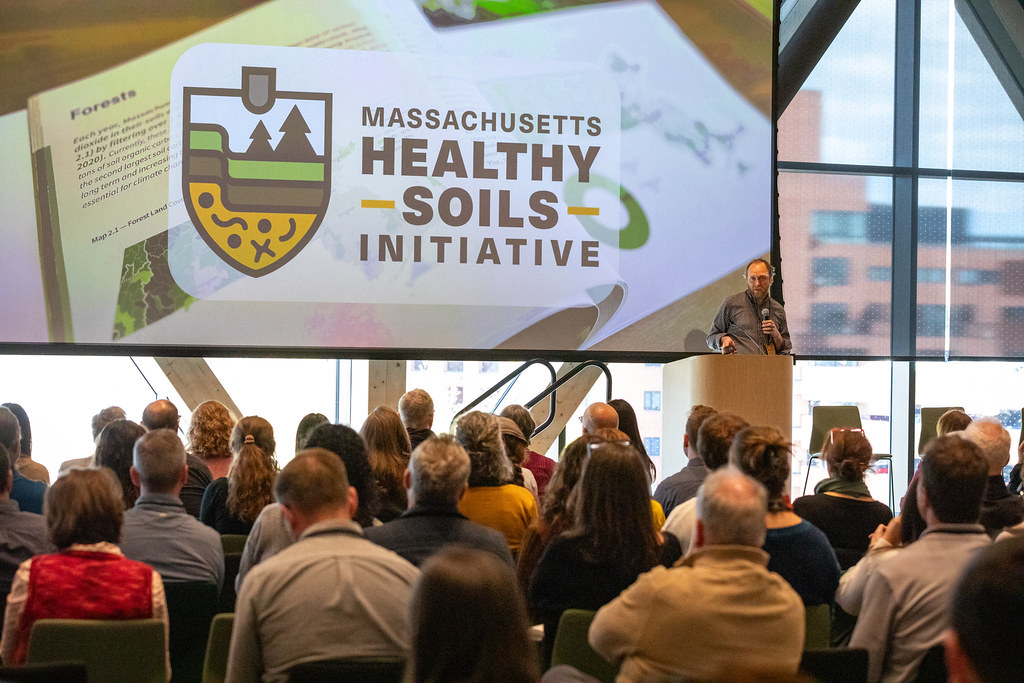
Bas presented a Climate Action Lightning Talk introducing the Soil Organic Carbon Mapping for Massachusetts project, or SOCMA — a new statewide GIS dataset developed by RDG through the Massachusetts Healthy Soils Initiative. For the first time, designers, planners, and municipalities across the Commonwealth have access to high-resolution data showing how much carbon any given piece of land holds, and what happens to that carbon when land use changes. The dataset doesn’t just document what’s at stake; it gives practitioners the information to advocate for different outcomes. A planner can now walk into a conversation about a proposed development with data. A designer can identify which development scenarios pose the greatest carbon cost, and where conservation or restoration would have the greatest benefit.
The tools are free, accessible in both QGIS and ArcGIS Pro, and available now on the Massachusetts Healthy Soils Website. For a deeper look at how the dataset was built and what it reveals, read our full post on the SOCMA project.
Promoting Cooperative Power
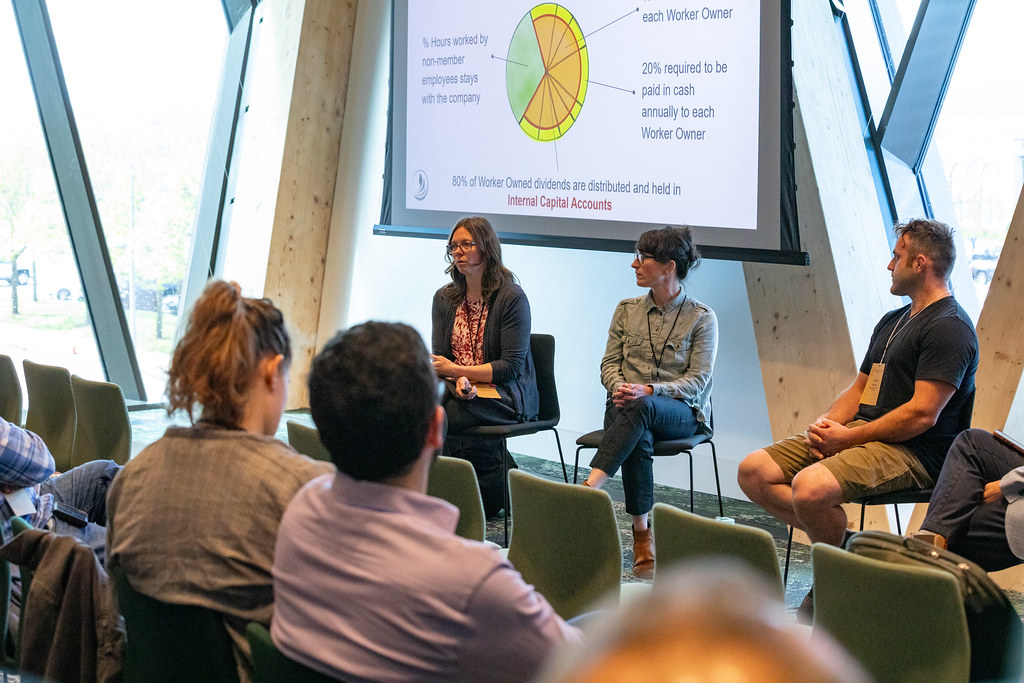
Alongside Scott Guzman of Diggers Cooperative and Sean Ragan of Tighe & Bond’s Halvorson Design Studio, Rachel and Genevieve presented “Resilience Through Employee-Ownership: Coop and ESOP Models.” The session provided an overview of cooperative principles and governance, and made the case that organizational resilience and ecological resilience aren’t separate concerns. Firms where workers have a genuine stake in the outcome, such as through profit-sharing, governance rights, and shared accountability, are better positioned to do sustainable, values-driven work over the long term. RDG’s five years as a worker-owned cooperative, navigating real challenges while continuing to grow, was part of the evidence. So were the stories from Diggers and Tighe & Bond, representing different paths to employee ownership.
We love sharing our cooperative journey and have covered it on the blog previously:
- We Are Worker-Owned!
- Joining Cooperative Forces
- Celebrating Another Year as a Worker-Owned Cooperative
Continuing the Conversation
Rachel will be bringing both of these threads of our work to the Ecological Landscape Alliance Annual Conference on August 27–28 in Providence, RI, presenting on our cooperative business model alongside the recently published Massachusetts Healthy Soils Guide to Site Design + Construction. If you’re attending, we’d love to see you there.
Thanks to the ASLA chapters of New England for putting together a conference that truly showcased the power of change in New England!