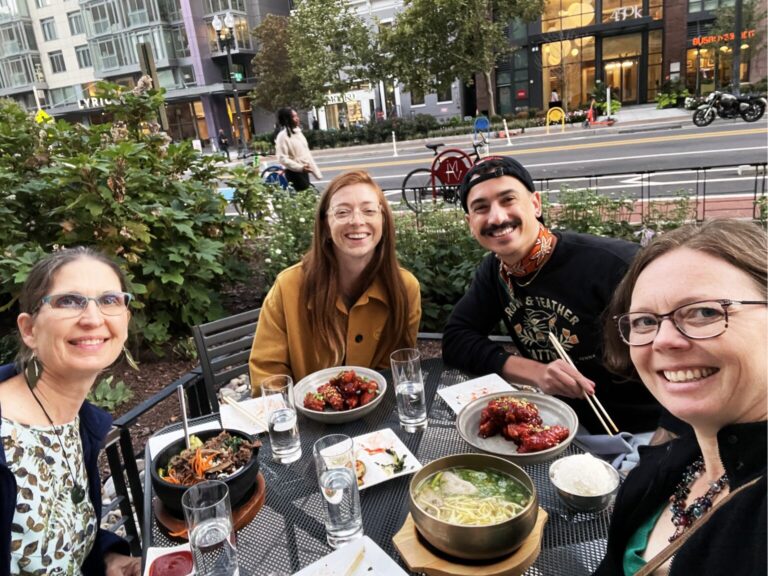
Von Harvey, RDG’s Communications Specialist, shares a personal reflection on recently becoming a worker-owner.
When I joined the team two years ago, it felt a little like I was learning a new language. I picked up the vocabulary fairly quickly (site design, naming conventions, acronyms and initialisms, etc.), but there was more to achieving true fluency. Becoming a worker-owner, as I did in May, marks a third milestone: from fluency to authorship.
My personal milestone happens to land during the five-year anniversary of RDG adopting a cooperative ownership model. As I reflected on becoming a worker-owner, I was curious what the rest of the team thought about our cooperative workplace. Their input helped inform and clarify my reflection, a fitting example of the shared authorship the cooperative is built on.
An Echoing Ethos

Long before RDG, I went to Hampshire College, whose motto is To Know Is Not Enough. Learning, the motto insists, is more than static knowledge; it requires context, consideration, and continuous evaluation, and it should inform action. Knowledge is meant to be shared, spread like seeds, not siloed. There was also a relational, collegial aspect to Hampshire’s educational approach. Instructors and advisors weren’t judging your work to give you a grade; they evaluated it as work in progress, and you as a colleague in training.
I recognize those same values at RDG in the permeable hierarchy, coworkers who feel like colleagues and mentors instead of bosses and supervisors, and a culture where you can feel comfortable pitching something, regardless of seniority.
As RDG team member Fen Johanson said, “While I have direct managers, it’s crystal clear to me at all times that we’re all in this together.”
Nate Card built on that sentiment when he said, “Coming in as a new hire and being treated as an equal… allowed me to focus on doing my best work instead of worrying about impressing my superiors.”
From the moment I began the hiring process, RDG felt like a workplace that treats shared purpose and genuine care for the people doing the work, and for the land and communities that work touches, as a necessity, not optics. Working here has continually affirmed that.
A Practiced Philosophy
RDG’s story starts with the original founder-owners: Bas Gutwein, Keith Zaltzberg-Drezdahl, and Jono Neiger. Bas and Keith met while attending UMass Amherst, where both started out in landscape architecture but felt the environmental design program was more aligned with their goals. Jono, then teaching permaculture design certification courses at The Conway School of Landscape Design, advised their joint honors thesis. The three had already talked about working together after graduation, and the 2008 economic crash turned that talk into action.
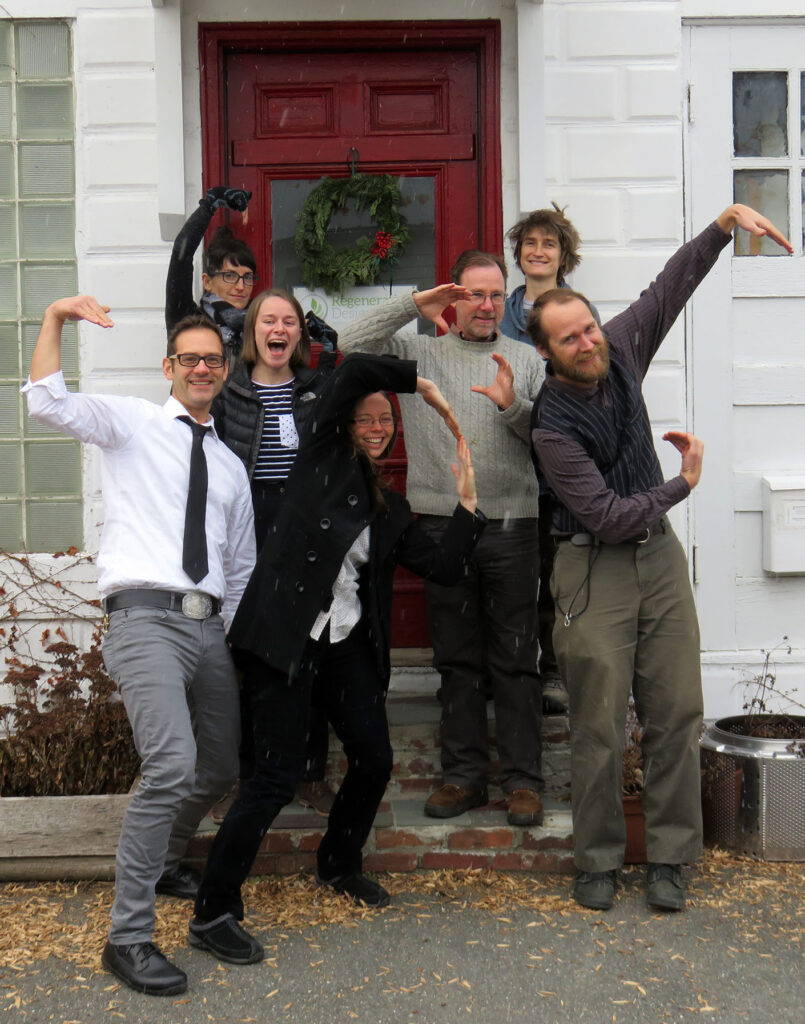
Although RDG officially incorporated as a coop five years ago, the cooperative ethos was already present when the business was an LLC. As soon as the founders began bringing on more people for design and administrative support, they started weaving in cooperative values. Before it was a legally codified coop, Bas, Jono, and Keith kept their own pay modest and split what was left at year’s end with all employees, creating a patronage-like arrangement.
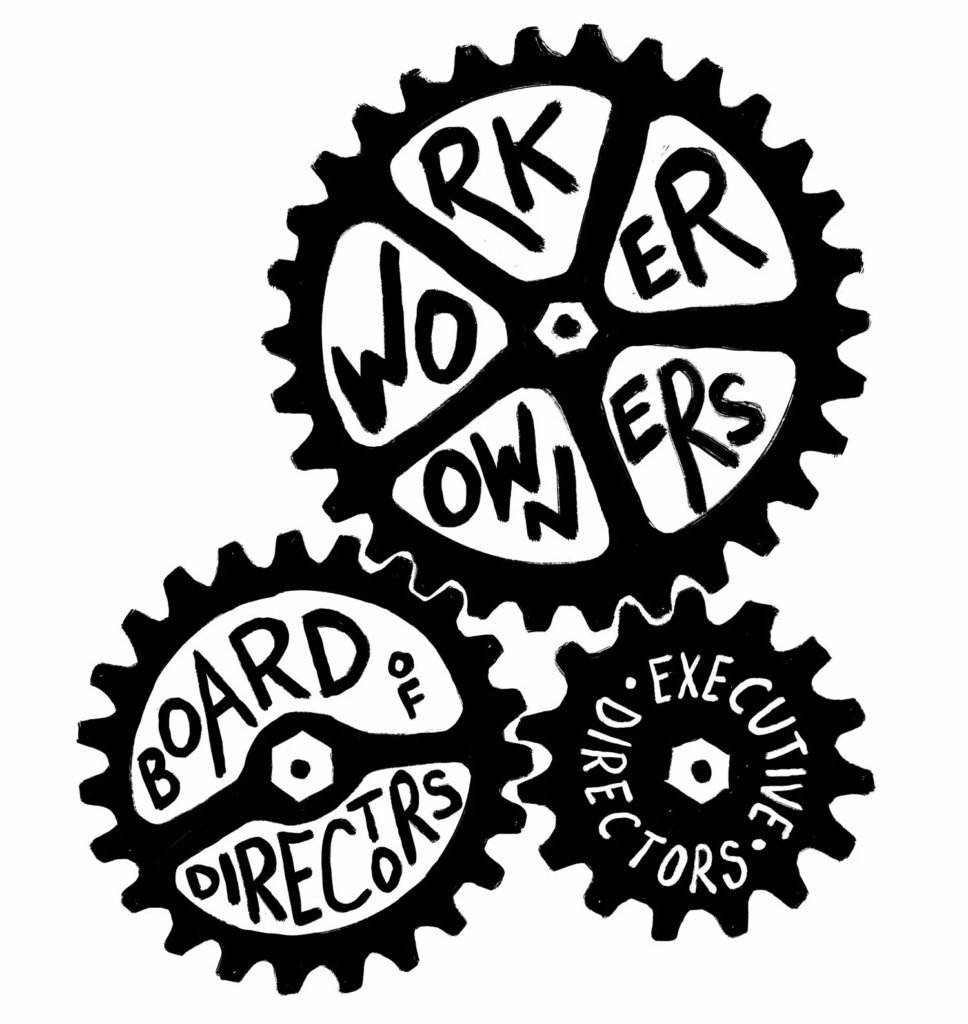
When the business celebrated its 10th anniversary in 2019, it felt like the right time to formalize the practiced philosophy, and an opportunity to join a thriving network of coops across western Massachusetts and New England. Bas, Keith, and Jono, along with Genevieve Lawlor and Rachel Lindsay, formed a steering committee to figure out what the transition would look like, and if it was worth doing. RDG officially incorporated as a worker-owned cooperative in January 2021 with seven original members: the five-person steering committee, who became the coop’s first Board of Directors, plus Anna Klein and Laura Krok-Horton.
A Deliberate Design
For Rachel, the shift wasn’t really about a change in hierarchy, as even before the transition, RDG didn’t have a strict one. Still, literally owning a voice felt different: “I no longer need to rely on being extroverted or outspoken to make my voice heard. Participating in financial and strategic business decisions feels natural and expected, not bold.”
Seva Water pointed to a recent member retreat as proof the model isn’t theoretical. For her, the clearest evidence wasn’t an idea; it was the full membership at the table, shaping the business’s direction together instead of hearing about it secondhand.
Knowing the coop model aligns with RDG’s values doesn’t mean it’s effortless. Rachel mused, tongue firmly in cheek, that giving everyone a say can be a challenge: “There are times, especially after a meeting spent dissecting the wording of a single sentence in our operating agreements, when I wonder if we’re communicating too much.” Genevieve echoed the same half-joke when naming the moment cooperative ownership felt real: “Probably at one of the first interminable-seeming board meetings.” That thoroughness is what a commitment to consensus actually takes.
That commitment shows up in the structure of the coop as well. Equity in a worker cooperative doesn’t compound with tenure the way it might at a traditional firm: it’s one member, one share, no matter how long you’ve been there or how much you’ve put in. It keeps every member’s stake and vote equal, founder and newest hire alike. Speaking for himself, Bas said he specifically wanted to build a workplace where power wouldn’t quietly concentrate in one person’s hands, or even three founders’.
Today, RDG is ten worker-owners strong, with four more on the path toward membership. We’re also contributing to the cooperative movement by sharing what we’ve learned in the process. In May, we brought our case study to BSLA Fieldday, arguing that a cooperative structure isn’t just a governance choice, but a design one.
A New View
My role as the Communications Specialist means I’m often outside the work itself. I lay out portfolio pages for ecological site designs I didn’t draft, interview my coworkers about climate resilience planning I understand only in broad strokes, and design websites that promote community engagement other team members facilitate. That distance means I get a holistic view of the organization that’s harder to spot from inside one project. I can ask the plain-language questions our audience is curious about, and the “so what” questions that might not seem necessary when you’re deep in the weeds of a project. This bird’s-eye view means I can see how being a cooperative feels intrinsic to the work my colleagues do. Nate captured that well when he said, “It’s not only an equitable and balanced way of running a business, it’s also the most ecological, considering that the more we learn about biological relationships in the wild, the more we come to realize how life thrives on cooperation.”
Becoming a member-owner gives me a way of being in it: a less observational, more immersive position. I love telling RDG’s story — it’s even more meaningful to be one of the people who gets to write it.
— Von Harvey, Communications Specialist + Worker-Owner
Later this month, Rachel will present on our cooperative case study and the Massachusetts Healthy Soils Guide for Site Design and Construction at the ELA 26th Annual Conference in Providence, RI, August 27–28. Register Now!